Nature’s Original Innovators — How Life Solved Problems Long Before Humans Existed

spider

Nature is not just scenery. It is the oldest research and development department on Earth, running experiments nonstop for nearly four billion years. Every plant, every animal, every microbe alive today carries within it a history of solutions that worked. Not perfect solutions — but effective, efficient, and adaptable ones. The real question is not whether nature can help humans solve problems. The real question is why it took us so long to notice.

This idea lives at the heart of a discipline called biomimicry — the science of studying nature’s designs to inspire human technology, architecture, medicine, and engineering.

Nature doesn’t invent randomly. It improves relentlessly.

Nature Doesn’t Fight Problems — It Designs Around Them

Human engineering often works by force: stronger materials, larger machines, more energy. Nature works differently. It uses shape, structure, pattern, and timing. Instead of thick walls, nature builds curves. Instead of brute power, nature relies on flow.

A bird’s bone, for example, is hollow — but reinforced internally with a honeycomb lattice. This makes it light and incredibly strong. A leaf spreads wide to capture light, but also channels rainwater so it doesn’t drown. A tree doesn’t resist the wind — it bends with it.

What looks fragile is often the smartest design.

The Kingfisher and the Bullet Train (Deeper Look)

When Japan developed its high-speed trains, engineers encountered a major problem: pressure shock waves. When the train burst out of tunnels at speed, it created a loud sonic boom that rattled homes and terrified communities.

Traditional solutions failed. Then an engineer who was also a birdwatcher noticed the kingfisher. This bird dives from air into water with barely a ripple. Its beak is long, narrow, and perfectly shaped to manage sudden pressure changes.

By reshaping the train’s nose to match the kingfisher’s beak:

  • Tunnel boom was eliminated

  • Energy consumption dropped

  • Top speed increased

Termite Mounds: The First Air-Conditioning Engineers

In the African savanna, termite colonies build towers several meters tall. Inside, millions of delicate insects live and farm fungus that can only survive within a narrow temperature range. Outside temperatures swing wildly.

The termites’ solution?

A natural ventilation system so refined it rivals modern HVAC:

  • Vertical chimneys pull hot air up

  • Cool air is drawn in through lower openings

  • Walls absorb heat during the day and release it at night

This strategy inspired buildings like the Eastgate Centre in Harare, which uses up to 90% less energy for climate control. No machines copied — only natural airflow logic.

Nature solved sustainable architecture long before “green building” existed.

Water Collection from Thin Air: Desert Beetles

In the Namib Desert, fog is often the only source of water. A small beetle solved this by evolving a shell with microscopic raised bumps and hydrophilic/hydrophobic patterns.

The beetle simply:

  • Faces the wind

  • Collects fog droplets

  • Channels them into its mouth via surface grooves

Engineers now use this principle to build fog-harvesting nets in water-scarce regions, producing drinking water from air alone.

Shark Skin → Bacteria-Resistant Surfaces

The Natural Problem

Sharks glide through polluted, blood-filled ocean water without things sticking to their skin. No algae slime. No barnacle forests. No bacterial films.

The Secret

Shark skin isn’t smooth. It’s covered in microscopic tooth-like scales called dermal denticles. These scales create tiny ridges that physically prevent bacteria from attaching, without using chemicals.

Human Application

Scientists copied the pattern to create Sharklet, a surface texture now used in:

  • Hospital walls

  • Surgical tools

  • Food-processing equipment

Interesting Fact

These surfaces reduce bacterial growth by up to 99% without a single drop of disinfectant.

Nature built antibacterial armor using shape, not poison.

Lotus Leaves → Self-Cleaning Buildings

The Natural Problem

How do lotus leaves stay clean in muddy ponds?

The Secret

Their surfaces are filled with nano-scale bumps coated with wax crystals. Water droplets can’t spread — they form perfect spheres and roll off, carrying dirt away.

This is called the Lotus Effect.

Human Application

Architects created:

  • Self-cleaning paints

  • Dirt-repellent glass

  • Pollution-resistant building facades

Story

A cathedral in Europe installed lotus-inspired paint, and after years of rain and pollution, its walls still looked freshly washed — with zero cleaning chemicals.

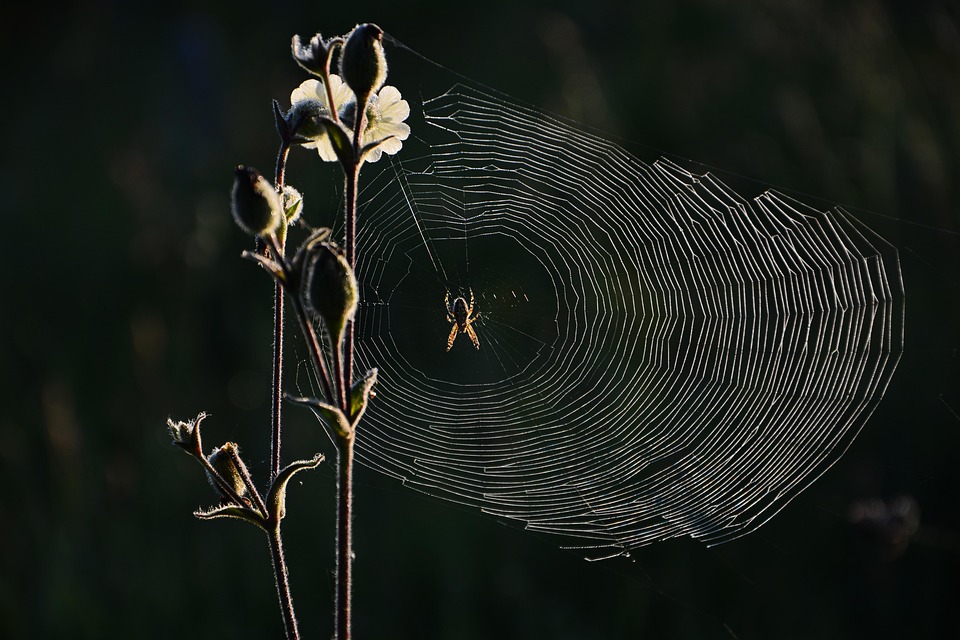
Spider Silk → Stronger Than Steel

The Natural Problem

Spiders need a string thin as air, but strong enough to trap flying insects.

The Secret

Spider silk is composed of protein chains arranged in a molecular spring structure. It is:

  • Stronger than steel (weight-for-weight)

  • More elastic than rubber

  • Biodegradable

Human Application

Scientists now use its structure to create:

  • Artificial tendons

  • Bullet-resistant fabrics

  • Surgical sutures

Interesting Fact

If spider silk could be mass-produced efficiently, a strand the thickness of a pencil could supposedly stop a jet in flight.

Owl Wings → Silent Technology

The Natural Problem

Owls hunt in total silence.

The Secret

Their wing feathers have soft serrated edges that break up turbulent air into quiet micro-currents.

Human Application

This inspired:

  • Quieter airplane wings

  • Silent drone blades

  • Low-noise wind turbines

Story

Military engineers copied owl wing structures so surveillance drones could fly almost silently over conflict zones.

Ant Colonies → Algorithms That Run the Internet

The Natural Problem

Ants find the shortest paths to food without maps.

The Secret

They leave pheromone trails. Shorter paths get reinforced faster as more ants walk them.

Human Application

This led to Ant Colony Optimization algorithms, now used in:

  • Internet traffic routing

  • Delivery logistics (Amazon, DHL type systems)

  • Road traffic light timing systems

Interesting Fact

Your online video may buffer less today because of math inspired by an ant’s tiny footsteps.

Woodpecker Skulls → Earthquake-Safe Helmets

The Natural Problem

Woodpeckers hammer trees at up to 20 times per second without brain damage.

The Secret

They have:

  • Spongy bone structures

  • Shock-absorbing tissue

  • A beak-to-skull design that redirects force away from the brain

Human Application

Inspired:

  • Safer sports helmets

  • Better aircraft black box shock protection

  • Earthquake-resistant building joints

Butterfly Wings → Color Without Paint

The Natural Problem

Butterflies like the Morpho glow electric blue — but there is no blue pigment.

The Secret

Their wings have nano-scale ridges that bend and reflect light to create color.

Human Application

This inspired:

  • Fade-proof paints

  • Anti-counterfeit currency features

  • Next-gen display screens

Interesting Fact

The color never fades because it isn’t real “color” — it’s physics.

Whale Fins → More Efficient Wind Turbines

The Natural Problem

Humpback whales glide through water with huge fins.

The Secret

The fins have bumps called tubercles along the leading edge. These control turbulence and increase lift.

Human Application

Wind turbine blades based on whale fins:

  • Generate more energy

  • Work at lower wind speeds

  • Are more stable in storms

Slime Mold → Smart Transportation Design

The Natural Problem

Slime molds can find the most efficient food networks without brains.

The Secret

They expand randomly, then shrink away inefficient paths.

Human Application

Researchers gave slime mold food in the pattern of cities around Tokyo.
The mold recreated a layout almost identical to Tokyo’s rail system.

0 Votes: 0 Upvotes, 0 Downvotes (0 Points)

Leave a reply

Previous Post

Next Post

Follow
Sign In/Sign Up Sidebar Search Trending
Popular Now
Loading

Signing-in 3 seconds...

Signing-up 3 seconds...