
Now Reading: Why Builders Trust Structures That Look Like They Shouldn’t Stand
-
01
Why Builders Trust Structures That Look Like They Shouldn’t Stand

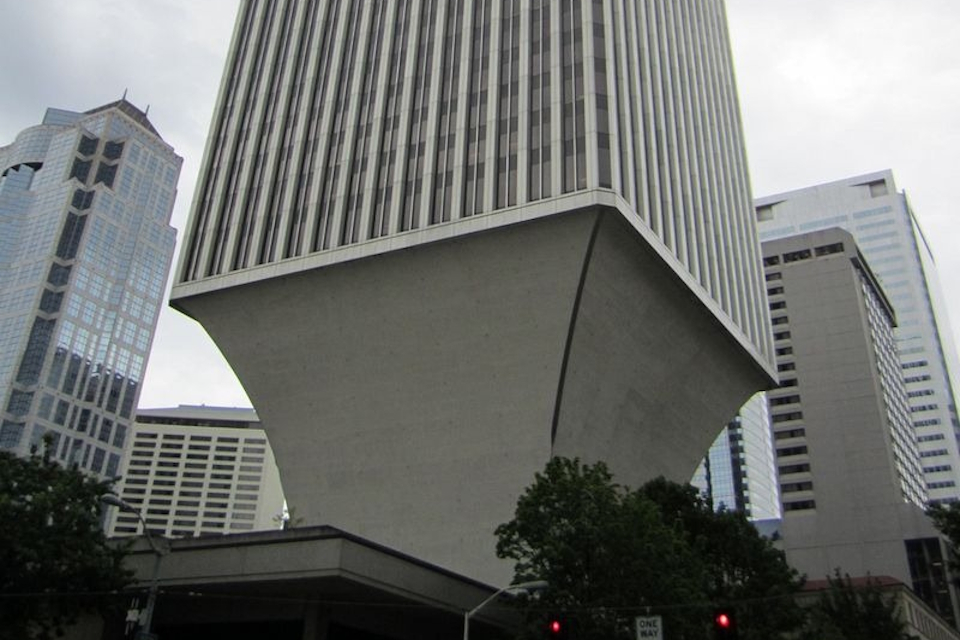
There’s a quiet fascination in watching a structure that appears to defy gravity. Cantilevered balconies hover over empty air. Stone arches carry immense weight with effortless grace. Slender towers rise higher than instinct tells us they should. To the untrained eye, these buildings look fragile, even impossible. Yet engineers and builders trust them completely. Why?
The answer lies in a marriage of physics, experience, and geometry that is older than modern architecture itself.
The Illusion of Instability
Our eyes are poor judges of structural truth. We associate thickness with strength and symmetry with safety, but real stability depends on how forces travel through materials. A thin concrete slab extending outward feels dangerous because we imagine it snapping under its own weight. In reality, steel reinforcement hidden inside redistributes tension, anchoring it firmly back into the core.
This is why long bridges can look delicate but carry thousands of tons, and why glass-walled skyscrapers can feel transparent yet remain rock solid. What feels unstable to a human brain is often just unfamiliar.
How the Forces Are Actually Controlled
Every load in a structure follows predictable paths:
-
Gravity pulls straight down.
-
Wind pushes sideways.
-
Earthquakes shake in waves.
Good design does not fight these forces; it guides them. Instead of resisting gravity everywhere, engineers concentrate strength only where stress actually occurs. This creates buildings that look light and daring, but behave calmly under pressure.
Arches move weight sideways into their supports. Suspended cables stretch and distribute tension. Cantilevers balance their outward reach with hidden counterweights and deep anchors.
When you understand the load paths, the “impossible” becomes obvious.
Trial, Failure, and Memory of Materials
Builders don’t trust bold designs blindly. They trust them because of centuries of accumulated knowledge.
Stone masons learned how much limestone would crack by watching walls fail. Ironworkers learned how beams bent long before they snapped. Modern engineers test scale models, simulate earthquakes, and push materials to their breaking point in labs.
What looks daring in the finished building is often the result of extremely conservative testing behind the scenes.
Why Modern Buildings Appear Even More Impossible
Today’s structures seem more daring than ever because materials have become smarter:
High-strength steel can flex slightly without breaking. Reinforced concrete can carry both compression and tension. Laminated glass can shatter without collapsing.
This allows architects to remove bulky supports and create floating stairs, panoramic overhangs, and curved forms that older materials could never safely produce.
The strength is still there — it’s just hidden.
The Psychology of Trust
Builders trust what experience proves. Engineers trust what the math confirms. Inspectors trust what the standards enforce.
But the public experiences only the visual result — the illusion of defying nature.
That tension between what we feel and what is actually happening is what makes these structures so powerful. They remind us that nature follows rules, and that humans, when they understand those rules deeply enough, can bend them without breaking them.
The Truth Behind the “Impossible”
Structures that “shouldn’t stand” actually do because they are not fighting gravity — they are cooperating with it. They guide force instead of resisting it blindly. They conceal strength rather than display it.
What looks like defiance is really profound obedience to physics.
And that is why builders trust them.
Famous Examples & Case Studies
Some of the world’s most trusted structures are the ones that look like they should fail. Their visual lightness hides deep engineering logic, carefully controlled force paths, and lessons learned from centuries of trial and error. Here are real-world examples that show why these “impossible” structures not only stand, but endure.
Golden Gate Bridge – Tension Mastery
San Francisco, USA
Why it looks impossible:
The bridge’s two slender towers appear to barely support the massive suspended roadway. From a distance, it seems almost weightless, hovering over the turbulent waters of the Golden Gate Strait.
Why it works:
-
The main cables are made of 27,572 parallel steel wires bundled into enormous strands, which carry nearly all of the bridge’s weight through tension.
-
The towers themselves only handle vertical compression, which steel excels at.
-
Anchorages on each side transfer the enormous tension into the bedrock.
-
Flexible design allows it to withstand earthquakes and heavy winds, absorbing movement rather than resisting it rigidly.
Interesting fact: The bridge can sway more than 27 feet in strong winds without structural damage.
Pantheon Dome – Ancient Concrete Genius
Rome, Italy
Why it looks impossible:
The Pantheon’s massive concrete dome spans 43 meters with no steel reinforcement. The open oculus at the top adds to the sense that the roof should collapse.
Why it works:
-
The Romans used lighter volcanic pumice in the upper sections to reduce weight.
-
Dome thickness decreases from 6.4 m at the base to 1.2 m at the oculus.
-
Compression forces travel along the curved surface evenly, pushing outward into thick walls.
-
Coffered ceilings reduce the load further without weakening the structure.
Interesting fact: The Pantheon has stood nearly 2,000 years through earthquakes and centuries of weather.
Burj Khalifa – A Needle Against Wind
Dubai, UAE
Why it looks impossible:
The world’s tallest building rises 828 meters as a slender spire, exposed to strong desert winds and sandstorms.
Why it works:
-
The “Y-shaped” design distributes weight and stabilizes against wind forces.
-
A buttressed core of reinforced concrete handles vertical loads while reducing sway.
-
The tower’s stepped setbacks “confuse” wind vortices, preventing oscillation.
-
High-strength concrete and steel allow flexibility; the building is designed to sway gently rather than resist all motion.
Interesting fact: The tower can sway up to 1.5 meters at the top during high winds — perfectly normal.
Millau Viaduct – Floating Above the Clouds
France
Why it looks impossible:
Thin, pencil-like pylons support a roadway high above the Tarn River valley, giving the illusion of a “bridge in the sky.”
Why it works:
-
Pylons are made of prestressed concrete, shaped to be both strong and flexible.
-
The deck is supported by cables in a harp-like pattern, transferring load evenly.
-
Slight movement of pylons allows them to bend under wind without cracking.
-
Foundations are deep into the valley bedrock, anchoring the structure securely.
Interesting fact: Each pylon is tall enough to almost touch clouds in winter, giving an ethereal effect.
Fallingwater – Cantilevered Harmony
Pennsylvania, USA
Why it looks impossible:
Concrete terraces extend dramatically over a waterfall with minimal visible support.
Why it works:
-
Terraces are reinforced with steel rods extending back into the main building core.
-
The weight of the overhangs is balanced by anchored stone walls.
-
Natural rock forms part of the structure, transferring some loads directly into the cliff.
-
Cantilevered slabs appear unsupported, but are carefully engineered to carry their own weight and live loads.
Interesting fact: Wright’s design was considered so radical that the initial engineers doubted the concrete would hold the cantilever spans.
Gothic Cathedrals – Flying Buttress Magic
Europe
Why it looks impossible:
Slender stone walls support massive vaulted ceilings filled with heavy stained glass. They appear delicate, almost skeletal.
Why it works:
-
Flying buttresses redirect lateral thrust from the ceiling vaults outward to solid piers.
-
Ribbed vaults concentrate weight along specific stone lines.
-
Vertical columns carry most of the vertical load, while arches handle horizontal forces.
-
Builders used incremental construction and centuries of empirical testing to perfect proportions.
Interesting fact: The designers often used scaled models and wooden prototypes to ensure stability long before stone was set.
Sydney Opera House – Shell Geometry
Sydney, Australia
Why it looks impossible:
Concrete “sails” float above the harbor, appearing disconnected and unsupported.
Why it works:
-
The shells are segments of a perfect sphere, allowing predictable force transfer.
-
Precast rib segments distribute the roof weight evenly.
-
Massive reinforced concrete base anchors the structure.
-
Internal geometry ensures that outward forces are redirected back into the foundations.
Interesting fact: Structural engineers described the final design as “solved mathematically,” after years of failed attempts with earlier plans.
Hoover Dam – Arch-Gravity Genius
Nevada/Arizona, USA
Why it looks impossible:
A single curved wall holds back over 1.2 billion cubic meters of water in Lake Mead.
Why it works:
-
The curved shape directs water pressure into the canyon walls.
-
Concrete weight resists the remaining pressure (gravity wall principle).
-
Divided into interlocking blocks to prevent cracking and dissipate heat.
-
Expansion joints accommodate thermal stresses.
Interesting fact: Engineers predicted millimeter movements of concrete blocks without failure, decades in advance.
Tensegrity Structures – Floating Balance
Worldwide
Why it looks impossible:
Rods appear suspended in midair, held only by cables.
Why it works:
-
Cables are under constant tension, rods under compression.
-
The structure maintains continuous equilibrium, meaning no single piece bears all the load.
-
Flexibility and redundancy make it very stable.
Interesting fact: The principle is used in NASA structures and experimental architecture because of its lightweight strength.
Inca Stone Walls – Earthquake-Proof Masonry
Machu Picchu, Peru
Why it looks impossible:
Irregular stones stacked without mortar, yet the walls withstand centuries and earthquakes.
Why it works:
-
Stones are cut to fit perfectly, interlocking tightly.
-
Walls have slight inward tilt to channel gravity downward.
-
Micro-movements during earthquakes prevent collapse.
-
Drainage systems remove water to reduce pressure.
Interesting fact: Even modern engineering struggles to replicate this combination of flexibility and strength without mortar.
Taj Mahal – Perfect Symmetry on a Soft Riverbank
Agra, India
Why it looks impossible:
A massive white marble mausoleum sits next to a soft, flood-prone riverbank. Its giant dome and four minarets look too delicate for their scale.
Why it works:
-
Built on a complex foundation of timber piles and wells sunk deep into the ground.
-
Timber stays strong underwater due to oxygen absence, preventing decay.
-
Minarets are slightly tilted outward by design, so if they collapse, they fall away from the central dome.
Engineering secret: The building “floats” on a stabilized, water-balanced foundation system.
Leaning Tower of Pisa – A “Failure” That Became Stable
Pisa, Italy
Why it looks impossible:
A visibly tilted stone tower that should have collapsed centuries ago.
Why it works:
-
The soft soil continued to compress gradually rather than catastrophically.
-
Engineers stabilized the tower by removing soil on the higher side, counterbalancing the tilt.
-
The stone structure itself is extremely symmetrical and strong in compression.
Interesting truth: It survived not because it is weak — but because it bends slowly, not suddenly.
St. Basil’s Cathedral – Load Hidden Under Ornament
Moscow, Russia
Why it looks impossible:
Multiple colorful domes of seemingly random shapes stacked irregularly.
Why it works:
-
Thick masonry core structures hidden beneath decorative outer layers.
-
Arches and vaults distribute loads efficiently.
-
Weight travels vertically through drum foundations.
Key idea: The playful appearance hides extremely conservative internal stone engineering.
Petra’s Treasury – A Temple That’s Actually a Mountain
Petra, Jordan
Why it looks impossible:
A massive carved temple with detailed columns stands without visible structure.
Why it works:
-
It is not “built,” but carved from solid rock.
-
The surrounding mountain acts as the structural support.
-
Columns are decorative rather than load-bearing.
Reality: The structure is essentially hollowed-out geology, not traditional architecture.
The Atomium – Giant Metal Spheres in Space
Brussels, Belgium
Why it looks impossible:
Massive silver spheres connected by narrow tubes.
Why it works:
-
Each sphere contains a steel truss skeleton.
-
Tubes contain structural load frames.
-
Expansion joints allow material to flex with temperature changes.
Engineering magic: Carefully balanced steel space frames distribute forces across the whole structure.
Pompidou Centre – The Building Turned Inside Out
Paris, France
Why it looks impossible:
Pipes, ducts, and structure exposed on the outside. Looks chaotic and fragile.
Why it works:
-
Massive external steel exoskeleton carries the building’s loads.
-
Interior space is column-free due to mega-trusses.
-
Color-coded systems keep structure separated from services.
Why engineers trust it: Strength is visible, not hidden.
Habitat 67 – Cubes Stacked Like a Card House
Montreal, Canada
Why it looks impossible:
Prefabricated concrete cubes stacked unevenly on top of each other.
Why it works:
-
Each module has internal steel reinforcement cages.
-
Loads transfer down through vertical stacking patterns.
-
Modules interlock and are post-tensioned together.
Reality: It’s not random — it’s locked like a 3D puzzle.
Skylon Tower Concept – Suspended From the Sky
1951 British Festival Concept
Why it looked impossible:
A tower that appeared to float, touching the ground only with tension cables.
Why it would work:
-
Damaged illusions created through tension-based anchoring.
-
Cables stabilized structure in three directions.
Truth: It looked magical, but was precisely mathematically balanced.
Mont-Saint-Michel – Stone Fortress Rising from Tides
France
Why it looks impossible:
A medieval stone city sits atop a narrow, tidal rock, surrounded by fast-rising sea waters.
Why it works:
-
Massive granite foundations anchored directly into bedrock
-
Gradual load stepping up the rock in terraced layers
-
Thick defensive walls acting as structural retaining systems
Infinity Cantilever Glass Floors
Various skyscrapers: Chicago Tower, Shanghai Tower
Why they look impossible:
Glass floors suspended over open air.
Why they work:
-
Multi-layer laminated glass
-
Steel underframes
-
Redundant safety layers
Even if one layer cracks, the others hold.
Core Truth Behind All These Structures
They survive because:
-
Their strength is in geometry, not brute material mass
-
They embrace movement, not stiffness
-
They use redundancy — multiple load paths instead of one fragile system
Builders trust them not because they appear strong, but because every hidden element, every calculated angle, has been proven to carry the forces of nature safely.










Related Posts


Stay Informed With the Latest & Most Important News
Previous Post
Next Post





Advertisement