
Now Reading: The Mystery of the Hessdalen Lights
-
01
The Mystery of the Hessdalen Lights

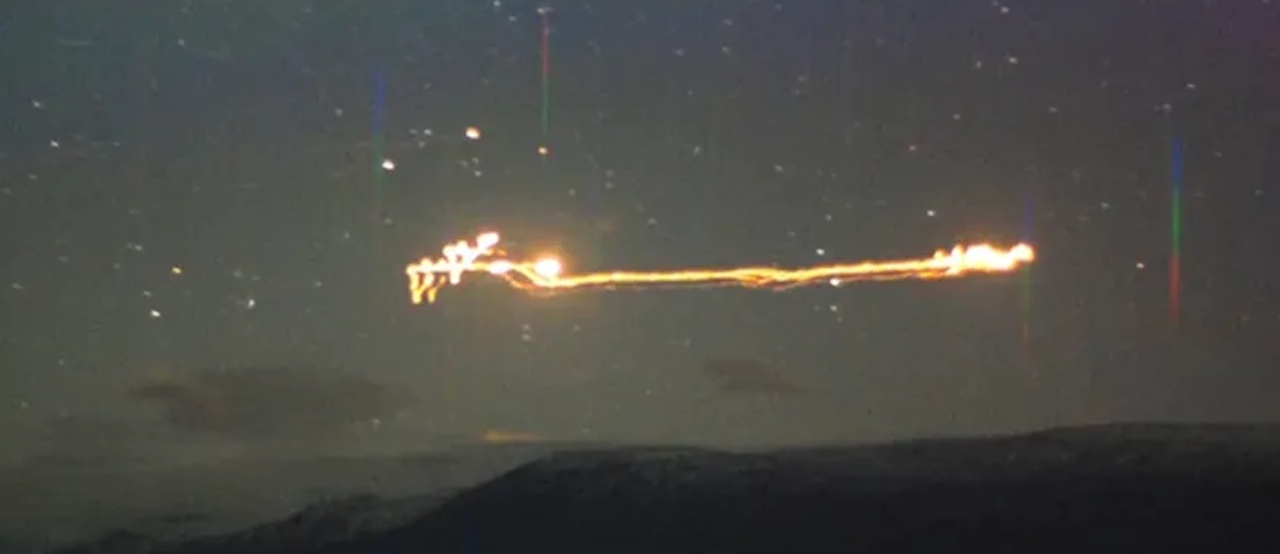
The Hessdalen Lights are among the most intriguing natural mysteries observed in modern times. These strange glowing lights appear in the remote Hessdalen Valley, a narrow mountain valley located in central Norway. The valley is sparsely populated, surrounded by forests, rivers, and rugged hills, creating an isolated environment where unusual natural phenomena can be observed without much interference from city lights or heavy human activity. Over the decades, residents and visitors have repeatedly witnessed bright floating lights moving silently across the sky, making the valley famous among scientists, researchers, and mystery enthusiasts.
The phenomenon first attracted international attention in the early 1980s. Around 1981, people living in the valley began reporting sightings of strange glowing lights appearing regularly during the night. At the peak of the phenomenon between 1981 and 1984, the lights were observed extremely frequently—sometimes up to twenty times per week. The sightings were so consistent that the valley quickly became a focus of scientific investigation. Unlike many mysterious sightings that occur only once or twice, the Hessdalen Lights appeared often enough that researchers could organize dedicated observation campaigns.
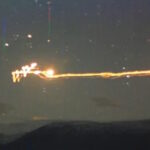
Witnesses describe the lights in many different forms. Most commonly they appear as bright glowing spheres or oval-shaped orbs that shine in white, yellow, or reddish colors. Sometimes the lights drift slowly across the sky, hovering above the valley as if suspended in midair. In other cases, they move rapidly, streaking across the horizon before suddenly disappearing. Some observers have even reported seeing a single light divide into two or three smaller lights that then travel in different directions. This unusual behavior has made the phenomenon particularly difficult to explain.
Another strange aspect of the lights is their unpredictable movement. Many sightings describe lights that remain completely still for several minutes before suddenly accelerating at extremely high speeds. In certain scientific observations, radar instruments recorded objects moving at speeds far greater than typical aircraft. What makes this even more mysterious is that the lights are usually completely silent. Even when they move quickly or appear very bright, witnesses rarely report hearing any sound associated with them.
Because the lights were appearing so often, several scientific teams organized research expeditions to study the phenomenon. One of the most important long-term projects is the Hessdalen Automatic Measurement Station. Established in 1998, the station continuously monitors the valley using specialized equipment such as optical cameras, infrared sensors, radar systems, magnetometers, and spectrum analyzers. These instruments help scientists gather detailed information about each light event, including brightness, movement, and electromagnetic signals.
The data collected from this station has confirmed that the lights are real physical phenomena rather than simple visual illusions or reflections. On several occasions, the lights have been detected simultaneously by cameras and radar equipment. Spectral analysis has also shown that some lights emit specific wavelengths of light, suggesting that they involve energized particles or ionized gases in the atmosphere. These findings have helped narrow down possible scientific explanations.
One of the leading hypotheses suggests that the Hessdalen Lights could be a rare type of natural plasma. Plasma is often called the fourth state of matter, in which gas becomes electrically charged and begins to emit light. Lightning and the aurora borealis are examples of natural plasma phenomena. Scientists believe that the geology of Hessdalen Valley may create ideal conditions for plasma formation. The valley contains metal-rich minerals such as iron and copper, and the nearby river adds moisture to the environment. Under certain weather conditions, electrical charges may build up between the ground and the atmosphere, forming glowing plasma spheres.
Another proposed explanation involves a geological process known as the piezoelectric effect. Some rocks, particularly those containing quartz, can generate electrical energy when they are compressed or stressed. If geological pressure builds up within the valley’s rock formations, it might produce electrical discharges that appear as glowing lights in the air. Although this idea remains speculative, it could help explain why the lights often appear in specific areas of the valley.
Interestingly, the Hessdalen Lights are not the only mysterious lights reported around the world. Similar phenomena have been observed in places such as Marfa, where the famous Marfa Lights have been seen for over a century. Another example is the Min Min Lights reported in remote parts of Australia. However, the Hessdalen Lights are unique because they have been studied more systematically with modern scientific instruments.
Today, Hessdalen Valley continues to attract scientists, photographers, and curious travelers hoping to witness the lights for themselves. Although sightings are less frequent than they were in the early 1980s, they still occur several times each year. The ongoing research conducted in the valley may eventually reveal the true cause of these mysterious lights. Until then, the Hessdalen Lights remain one of the most fascinating unsolved atmospheric phenomena on Earth, blending science, mystery, and the natural beauty of Norway’s remote landscapes.










Related Posts
Stay Informed With the Latest & Most Important News
Previous Post
Next Post



Advertisement