
Now Reading: Karijini Gorges – a network of dramatic red-rock canyons
-
01
Karijini Gorges – a network of dramatic red-rock canyons

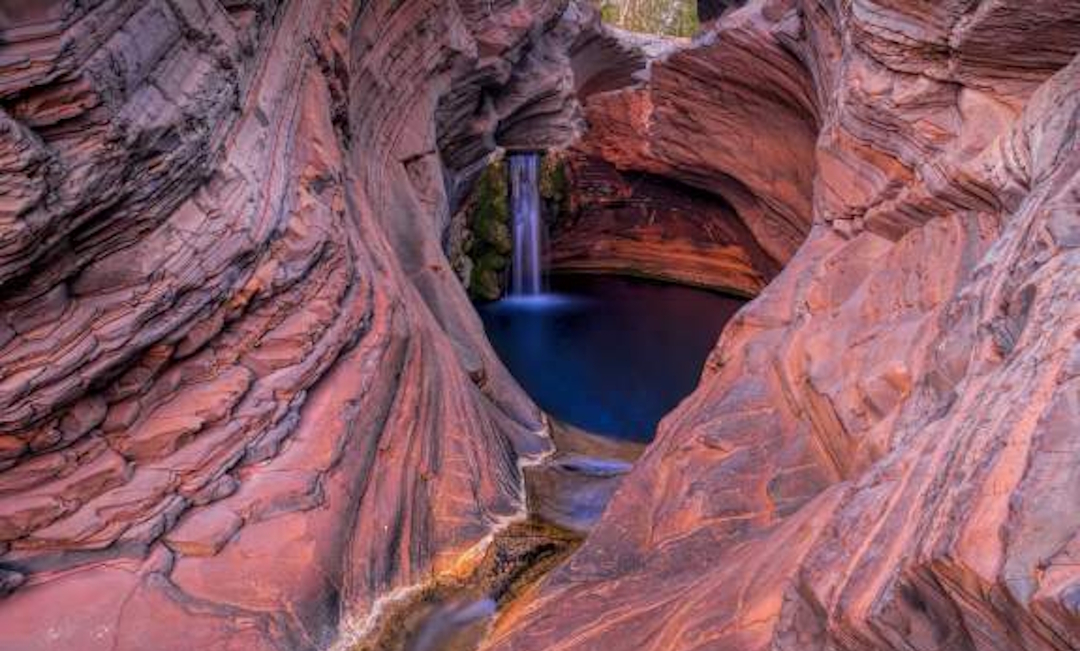
Deep in the heart of Western Australia lies one of the continent’s most awe-inspiring natural landscapes: the Karijini Gorges, located within Karijini National Park. This vast and remote park spans over 6,200 square kilometers, carved over billions of years by rivers and erosion, and is renowned for its towering iron-rich cliffs, narrow canyon passages, and hidden emerald pools. The gorges are a geological marvel, offering visitors a window into Earth’s distant past and a playground for adventurous explorers.
The geology of the region is extraordinary. Much of the plateau is made of banded iron formations that formed about 2.5 billion years ago. These layers of iron and silica were deposited in shallow oceans during the Archean and early Proterozoic. At the time, the atmosphere contained almost no oxygen, and iron in the ocean was soluble. When photosynthetic microorganisms began producing oxygen, it reacted with the dissolved iron, precipitating out as iron oxide. Over millions of years, these layers became compacted and solidified into rock. On top of the iron-rich layers, sedimentary rocks such as shales and sandstones were deposited. These layers record changes in ancient environments, including shallow seas, river deltas, and occasional volcanic activity. They add variety to the gorges’ rock walls, creating the contrasting colors and textures seen today, from deep reds of iron to softer greys and browns of sandstone and shale.
Among the most famous gorges is Dales Gorge, known for its accessibility and iconic waterfalls. The gorge features Fortescue Falls, a cascading waterfall that remains flowing year-round, and Fern Pool, a tranquil swimming hole nestled between steep, red cliffs. Visitors walking along the gorge trail are treated to dramatic vistas as sunlight illuminates the cliff faces, bringing out the deep reds and golden hues of the iron-rich rock. Dales Gorge exemplifies the park’s combination of rugged beauty and serene natural pools.
Just nearby is Hancock Gorge, arguably the park’s most adventurous destination. Known for its narrow, twisting passages, the gorge challenges hikers with tight squeezes, slippery rock scrambles, and wading through pools of water. The highlight, Kermit’s Pool, rewards those who make the trek with crystal-clear emerald waters surrounded by polished rock walls. Hancock Gorge demonstrates how water continues to shape the landscape, carving smooth rock surfaces that are both visually stunning and physically challenging.
Adjacent to Hancock is Weano Gorge, a gateway to multiple hiking routes and hidden waterfalls. Weano Gorge combines steep canyon walls with shallow pools and winding pathways, making it ideal for day hikes or longer explorations. Seasonal rainfall dramatically transforms the gorge, feeding temporary waterfalls that plunge into the natural pools, adding an ephemeral beauty to the already striking landscape. Weano is a perfect example of how water and rock interact to create a dynamic and ever-changing environment.
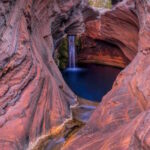
Further into the park lies Hamersley Gorge, often praised for its photogenic rock formations and mineral-rich pools. Spa Pool, one of its most famous spots, displays swirling patterns in the rock where iron and mineral sediments create ribbons of color. Water flows gently through the gorge, maintaining the lush pools that attract birds, frogs, and other wildlife. Hamersley Gorge highlights the combination of visual spectacle and ecological richness that makes Karijini Gorges unique.
Water is a critical feature of these gorges, creating microhabitats in an otherwise arid environment. Even in the scorching summer heat of the Pilbara, when temperatures exceed 45°C (113°F), the pools within the gorges remain cool and refreshing. These oases support ferns, aquatic insects, frogs, and small fish, creating a surprising biodiversity hotspot. The contrast between the harsh desert above and the lush vegetation in the gorges enhances the sense of discovery for anyone exploring these hidden corners.
The human history of the region is equally fascinating. The Karijini area has been home to Indigenous Australian peoples, including the Banjima, Yinhawangka, and Kurrama communities, for tens of thousands of years. Many gorges and rock formations hold spiritual significance, associated with Dreamtime stories and ancestral beings. Rock shelters and ancient artifacts found in the park demonstrate that humans have interacted with this landscape for millennia, leaving behind a rich cultural heritage that complements the natural beauty.
Karijini Gorges are also a photographer’s paradise. The interplay of light and shadow along the canyon walls creates dramatic visual effects, particularly at sunrise and sunset. Seasonal water flow transforms the gorges, reflecting the vibrant colors of the cliffs in emerald and turquoise pools. Adventurers, hikers, and geologists alike are drawn here not only for the scenery but also to experience the raw, untouched wilderness that feels entirely separate from modern civilization.
Karijini Gorges offer one of the clearest windows into Earth’s geological past. The combination of ancient rocks, colorful iron formations, steep cliffs, and ongoing erosion processes make it a living laboratory for geologists. Visitors can observe billions of years of Earth history in every layer, gorge, and pool, while enjoying one of the most spectacular natural landscapes in Australia.










Related Posts
Stay Informed With the Latest & Most Important News
Previous Post
Next Post



Advertisement