

Now Reading: Blood Falls: Antarctica’s Scarlet Mystery
-
01
Blood Falls: Antarctica’s Scarlet Mystery

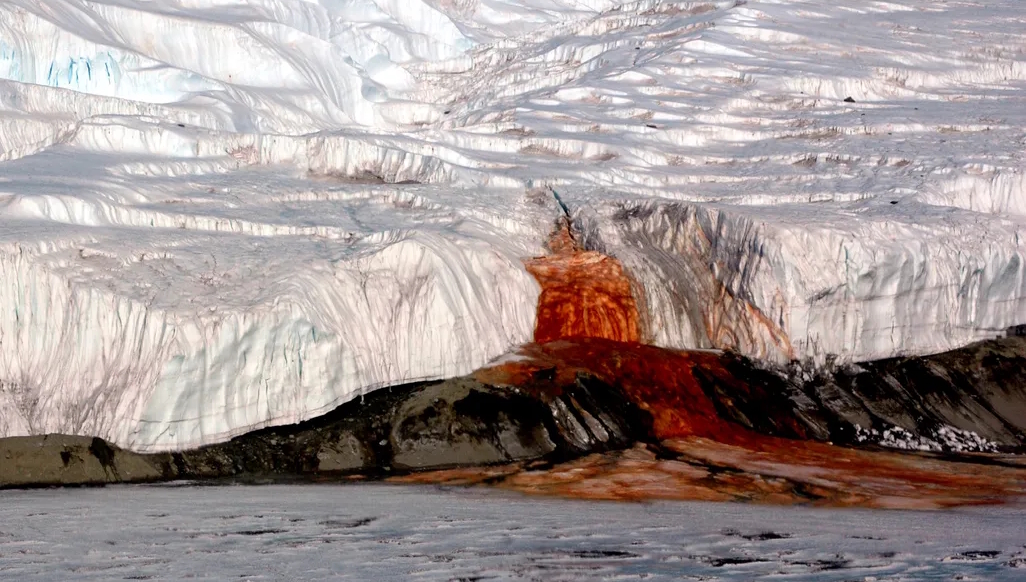
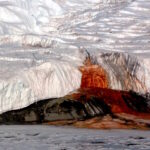
Nestled in the remote McMurdo Dry Valleys of Antarctica lies one of the planet’s most surreal and enigmatic natural phenomena: Blood Falls. Unlike any other waterfall on Earth, Blood Falls does not cascade from a verdant cliff, nor does it originate from a conventional river. Instead, it emerges from the Taylor Glacier, a massive, slow-moving ice formation that dominates this arid polar desert. The water trickling down the glacier is a deep, rusty red, creating the illusion that the ice itself is bleeding — a sight so striking it has captured the imagination of explorers, scientists, and photographers alike.
The Origin of the Red Water
The vivid scarlet hue of Blood Falls is caused by iron-rich hypersaline water trapped beneath the glacier. This water is not recent; it has been sequestered for millions of years in pockets beneath the ice, completely cut off from the atmosphere. During this isolation, the water became supersaturated with iron and other minerals, creating a brine that remains liquid even at temperatures far below freezing. When the water eventually seeps out of the glacier’s ice fissures and comes into contact with oxygen in the air, the iron oxidizes, forming iron oxide — essentially rust — which colors the water in shades of deep red and crimson.
Interestingly, this phenomenon demonstrates that even in extreme, seemingly lifeless environments, geochemical processes continue to shape the landscape, creating visual spectacles that defy expectations. Blood Falls is, in many ways, nature’s reminder that Earth harbors hidden chemistry beneath even the most inhospitable surfaces.
The Microbial Life Beneath the Ice
Perhaps even more fascinating than the red water itself is what it reveals about life under extreme conditions. Scientists have discovered that the subglacial brine contains microbial communities that have survived in complete darkness and without oxygen for over a million years. These microbes feed on iron and sulfur compounds in the water, demonstrating that life can thrive in isolated, extreme environments previously thought uninhabitable.
This discovery has profound implications for astrobiology. The microbes of Blood Falls provide a terrestrial analogue for life that might exist on other planets or moons, such as Mars, which hosts iron-rich soil, or Europa, an icy moon of Jupiter, which may harbor liquid water beneath its frozen surface. Blood Falls is thus not only a natural wonder but also a laboratory for understanding the limits of life.
Geological and Environmental Context
Blood Falls exists within the McMurdo Dry Valleys, often described as the driest place on Earth. These valleys receive almost no rainfall, and the environment is dominated by stark ice, gravel plains, and rock formations. The Taylor Glacier itself is a slow-moving river of ice, advancing only a few meters per year, yet beneath it lies a complex system of brine channels and subglacial lakes.
The hypersaline water feeding Blood Falls is so salty that it remains liquid at temperatures well below the freezing point of pure water, allowing the iron-rich brine to slowly flow out of the glacier. This unusual combination of ice, salt, and iron creates the perfect conditions for the waterfall’s iconic blood-red appearance.
Discovery and Scientific Exploration
Blood Falls was first documented in 1911 by Australian geologist Griffith Taylor, a member of the British Terra Nova Expedition. At the time, the phenomenon was mysterious, and its cause remained unknown. In recent decades, modern scientists have employed ice-penetrating radar, satellite imagery, and chemical analysis to unravel the secrets of Blood Falls.
Studies have confirmed that the water originates from ancient subglacial reservoirs, making it a unique example of long-term isolation on Earth. Ongoing research focuses on the microbial ecosystems, geochemical interactions, and seasonal dynamics that allow the waterfall to persist in one of the planet’s harshest climates.
A Visual and Seasonal Wonder
The red streak of Blood Falls is not always constant. Its intensity fluctuates depending on seasonal melting and flow rates. During the Antarctic summer, when surface melting increases, the waterfall becomes more pronounced, streaming down the white ice in stark contrast to the surrounding glacier. Photographers and scientists alike are drawn to the site, captivated by its ethereal beauty and otherworldly aura.
The appearance of Blood Falls reminds visitors that Antarctica is not merely a frozen wasteland, but a dynamic, living system where chemistry, biology, and geology interact in unexpected ways.










Related Posts
Stay Informed With the Latest & Most Important News
Previous Post
Next Post






Advertisement