
Now Reading: Chasing the Blue Tide: The Magical Spring Phenomenon of Toyama Bay
-
01
Chasing the Blue Tide: The Magical Spring Phenomenon of Toyama Bay

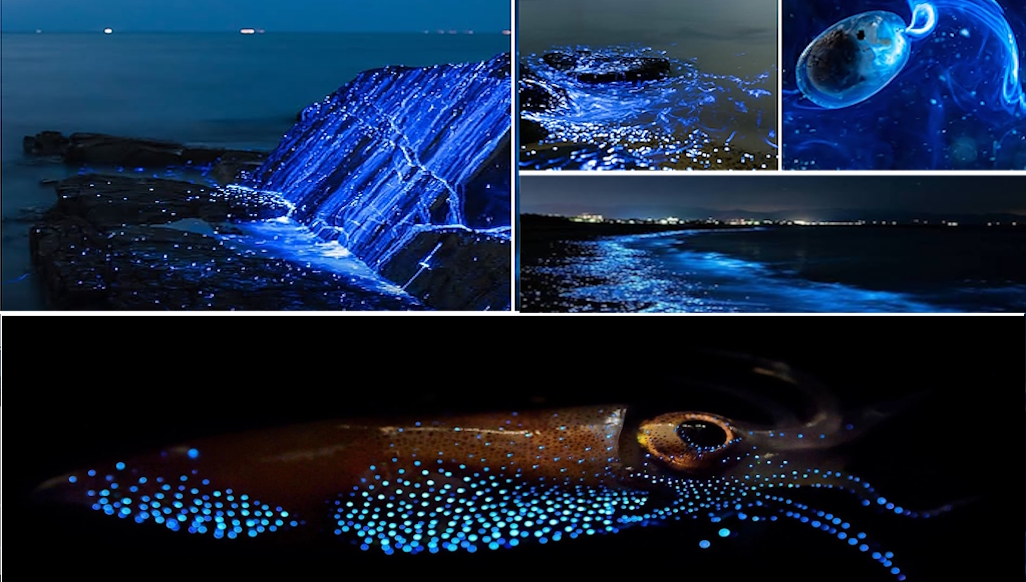
There is a moment just past midnight on a cool, spring beach in Japan where the boundary between the ocean and the night sky completely dissolves.
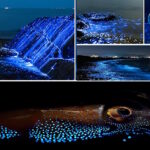
As the waves roll in, they don’t break with the usual white foam. Instead, they crash in brilliant, pulsing crests of electric, neon blue. It looks like a scene straight out of a sci-fi fantasy, as if stars are spilling directly out of the deep sea and onto the sand.
This isn’t a trick of light or a digital effect. This is the annual spawning migration of the Firefly Squid (Watasenia scintillans), a natural spectacle that turns Japan’s Toyama Bay into one of the most breathtaking light shows on Earth.
The Million-Light Migration
Every year from March to June, Toyama Bay becomes the stage for a spectacular biological event. Billions of tiny, three-inch-long deep-sea cephalopods rise from the ocean’s dark depths and migrate to the shallow coastal waters to spawn.
During the day, these tiny squid live hundreds of meters deep in the cold, pitch-black canyons of the bay. But under the cover of night, driven by the instinct to reproduce, they ascend to the surface in staggering numbers.
When the spring tides and winds align, millions of these sparkling creatures are swept toward the shoreline. The result? A jaw-dropping phenomenon known locally as Hotaru-ika no Minage—literally, the “throwing-themselves-ashore of the firefly squid.” As the waves ripple and the squid wash onto the sandy beaches, they release brilliant flashes of blue light, painting the entire coastline in an otherworldly neon glow.
The Science Behind the Sparkle
How does a creature so small produce a light so blindingly bright?
The firefly squid is a master of self-luminescence. Its body is covered in hundreds of microscopic light-producing organs called photophores. Unlike other glowing sea creatures that rely on external bacteria to light their way, the firefly squid generates its own light through a precise chemical reaction.
1. The Chemistry (ATP-Driven)
The reaction takes place inside the photophores:
-
A unique, light-emitting pigment called coelenterazine disulfate (the squid’s specific luciferin) reacts with oxygen.
-
This reaction is catalyzed by the enzyme luciferase.
-
Unlike many other bioluminescent systems, the firefly squid’s reaction strictly requires adenosine triphosphate (ATP)—the cell’s energy currency—and magnesium ions to trigger the glow.
2. Precise Light Control
Firefly squid don’t just glow randomly; they have incredible control over their light. They possess three main types of photophores:
-
The Arm-Tip Photophores: Three large glowing organs at the tip of their IV-arms. These produce the brightest, most intense flashes of light.
-
The Ocular Photophores: Five tiny glowing organs clustered around each eye, used to detect ambient light levels.
-
The Body Photophores: Hundreds of microscopic dots spread across the mantle and head.
Why Do They Glow?
While the glowing display looks like a festival for humans, for the squid, it is a matter of survival:
-
Counterillumination (Stealth Mode): Deep-sea predators looking upward see the faint sunlight filtering down through the water. By lighting up the photophores on their undersides to match the intensity and color of the sunlight above, the squid completely erase their silhouettes, becoming practically invisible to predators below.
-
Communication & Mating: The squid flash their bright arm-tips to signal potential mates or deter rivals during the chaotic spawning season in Toyama Bay.
-
Predator Distraction: If threatened, they can flash their bright arm photophores to temporarily blind a predator, giving them a chance to escape into the dark.
Nature’s Perfect Amphitheater
Toyama Bay is one of the very few places on the planet where this phenomenon occurs so close to land, and it is all thanks to a unique quirk of underwater geography.
The bay is shaped like a massive, steep submarine canyon that drops off to depths of over 1,200 meters (nearly 4,000 feet) incredibly close to the shore. Because the deep ocean floor sits right on the edge of the coastline, the squid don’t have to travel far to make their nightly vertical commute.
When spring arrives, fresh snowmelt from the towering Northern Alps cascades into the bay. This cold, rushing water triggers powerful upward-moving currents that gently sweep the spawning squid out of their deep-sea sanctuary and funnel them directly onto the shallow beaches.
How to Witness the Magic
If chasing the blue tide is on your bucket list, experiencing it requires a bit of planning, a lot of patience, and a willingness to brave the cold, pre-dawn hours.
-
The Best Time to Go: The peak of the season runs from mid-April to early May. Your best chance of seeing the shoreline glow is during a new moon (when the sky is at its darkest) on a calm, windless night when the tide is high.
-
The Beach Safari: Armed with flashlights and buckets, locals and travelers head to beaches like Iwase Beach in Toyama City between 2:00 AM and 4:00 AM to search for the glowing wash-ups along the water’s edge.
-
The Sightseeing Cruises: For an up-close look, you can book a pre-dawn boat tour from the Namerikawa port. These boats take you out to watch local fishermen pull up their seasonal nets. As the nets break the surface, the disturbed squid flash in unison, turning the dark water into a swirling, glowing vortex of neon blue.
A Taste of Spring
In Toyama, the firefly squid (hotaru-ika) is not just a sight to behold; it is also a highly anticipated culinary delicacy that marks the official arrival of spring.
Local restaurants serve the plump, flavorful squid in a variety of traditional ways. The most popular is Hotaru-ika no Sumiso-ae—lightly boiled whole squid served chilled with a sweet, tangy mustard-miso sauce. The squid are also served raw as sashimi (after being meticulously prepared and flash-frozen for safety), deep-fried as crispy tempura, or marinated in soy sauce and sake (okizuke).
Whether you are a photographer looking to capture the glowing shoreline, a nature lover eager to witness one of the ocean’s greatest migrations, or a foodie searching for the ultimate taste of spring, Toyama Bay’s glowing blue tide is a bucket-list experience that proves truth is often far more magical than fiction.










Related Posts

Stay Informed With the Latest & Most Important News
Previous Post
Next Post







Advertisement