
Now Reading: The Electric Blue Volcano: Kawah Ijen
1
-
01
The Electric Blue Volcano: Kawah Ijen

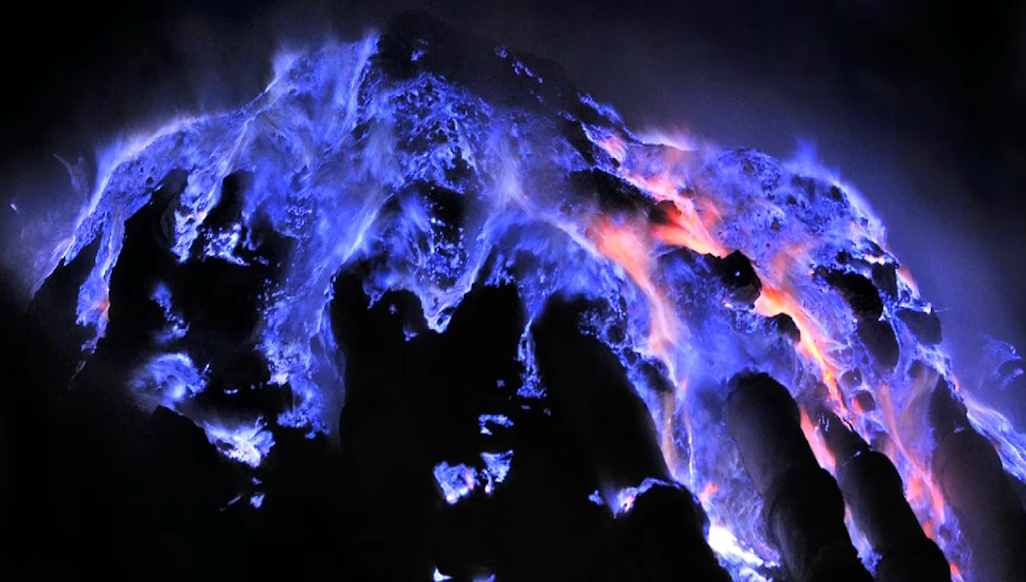
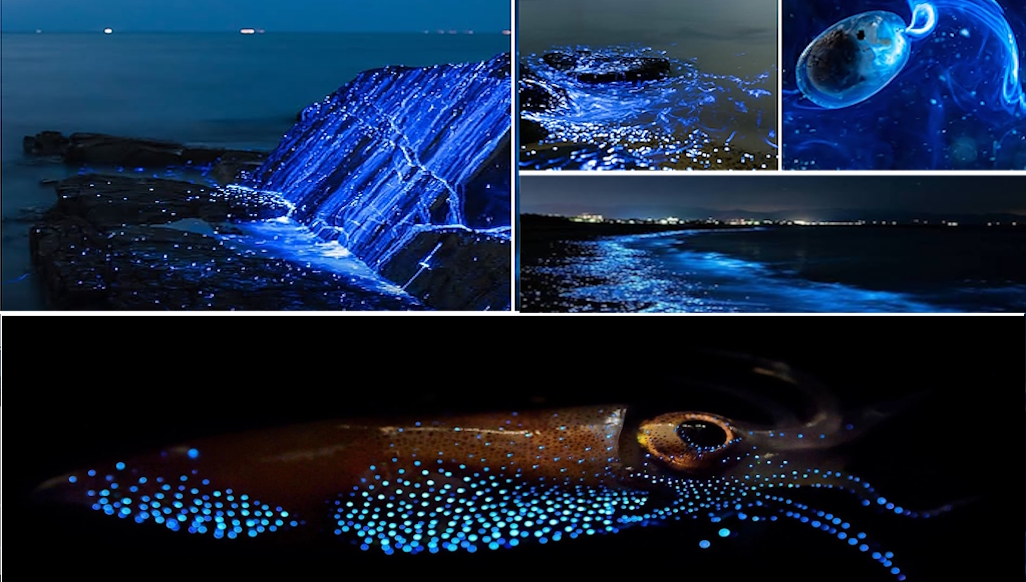
Deep within the volcanic complexes of East Java, Indonesia, lies a landscape so alien it defies belief. By day, Kawah Ijen is a stunning, turquoise acid lake shrouded in white steam. By night, it transforms into an otherworldly theater of electric-blue fire.
Why is the Fire Blue?
A common misconception is that Kawah Ijen erupts blue lava. In reality, the phenomenon is entirely chemical.
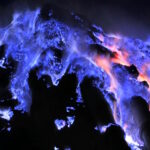
Deep pockets of elemental sulfur are heated to extreme temperatures by underground magma. This creates highly pressurized sulfur gases. When these gases escape through rocky cracks (fumaroles) at temperatures exceeding 600°C (1,112°F), they ignite the moment they hit the oxygen-rich night air.
The combustion produces a hot, violet-blue flame that can leap up to 5 meters (16 feet) into the sky. Because some of the sulfur gas condenses into a liquid state while burning, it streams down the rocky slopes. This creates the surreal, viral illusion of glowing blue lava pouring down the mountain.
A Turquoise Deception
As dawn breaks over East Java, the blue flames slowly fade into the sunlight, revealing a completely different geological wonder: the Kawah Ijen crater lake.
Spanning roughly 1 kilometer wide, this is the world’s largest highly acidic crater lake. While its bright, milky-turquoise water looks incredibly inviting, it is highly toxic. The water has a pH ranging between 0.5 and 0.1—making it stronger than car battery acid.
The lake gets its vibrant, surreal color from massive concentrations of dissolved metals (like iron and aluminum) and high amounts of sulfuric and hydrochloric acid fed by the active hydrothermal system churning beneath it.
The Miners of the “Devil’s Gold”
Beyond the natural beauty, Kawah Ijen is the backdrop for one of the most grueling human endeavors on Earth. It functions as one of the world’s last remaining active, hand-harvested sulfur mining operations.
The Process
Miners channel the volcano’s toxic sulfur gases through primitive ceramic and iron pipes. As the trapped vapors cool, they condense into a deep red, liquid sulfur that drips onto the crater floor. Once it hits the air, it cools and hardens into bright yellow, solid slabs.
Extreme Labor
Using heavy metal poles, the miners break the solidified sulfur into chunks and load them into double bamboo baskets (pikulan). They carry loads weighing between 70 to 100 kilograms (150 to 220 lbs) entirely on their shoulders.
The Treacherous Climb
Miners must carry these crushing loads up a steep, rocky, 300-meter vertical ascent out of the crater floor before walking another 3 kilometers down the mountainside to a weighing station. Many repeat this journey twice a day.
The Health Toll
Working directly inside dense, swirling clouds of hydrogen sulfide and sulfur dioxide gases, many miners historically worked without standard respirators. Over time, these toxic gases dissolve teeth and cause permanent respiratory damage. Despite the extreme danger, it remains a sought-after local livelihood because it pays slightly more than standard agricultural labor in East Java.
The “Edible” Souvenirs (Sulfur Sculptures)
To make a little extra money, many miners use small plastic molds (often shaped like turtles, flowers, or Hello Kitty) and place them directly under the dripping, liquid red sulfur. Within minutes, the sulfur cools into hard, bright yellow figurines. They sell these to tourists along the trail for a couple of dollars.
-
- Fascinating Detail: While they look like plastic toys, they are 100% pure volcanic mineral. Just don’t pack them next to anything damp; they retain a faint smell of rotten eggs!
The “Banyuwangi Phenom” (The Disappearing Lake)
The crater lake is so deep (around 200 meters/660 feet) and holds so much dense, heavy, acidic water that it acts like a massive lid on a boiling pot. Sometimes, a phenomenon called a “banyuwangi” occurs. Tremors deep beneath the volcano cause a sudden release of trapped gases at the bottom of the lake. This causes the entire turquoise lake to violently churn, change color to a muddy grey, and release a massive, sudden cloud of deadly gas, forcing immediate evacuations of the entire mountain.
The “Acid River” of Banyupahit
The acid from Kawah Ijen’s lake doesn’t just stay in the crater. It slowly seeps through the porous volcanic rock and feeds into a river called Banyupahit (which literally translates to “Bitter Water”).
-
- The Result: For kilometers downstream, the river water is highly acidic, neon green, and completely devoid of fish or plant life. Local farmers further down the valley have to carefully monitor their irrigation channels to ensure this “volcano juice” doesn’t accidentally destroy their rice paddies.
The Acoustic Illusion
When you are standing inside the crater at night, the sound design of the volcano is terrifyingly beautiful. Because of the steep, bowl-like amphitheater of the crater walls, the roaring and hissing of the high-pressure sulfur gases escaping the pipes is magnified. It sounds exactly like a jet engine roaring right next to your ear, creating an intense sensory overload when paired with the blinding blue light.










Related Posts
Stay Informed With the Latest & Most Important News
Previous Post
Next Post
Donations


Advertisement